
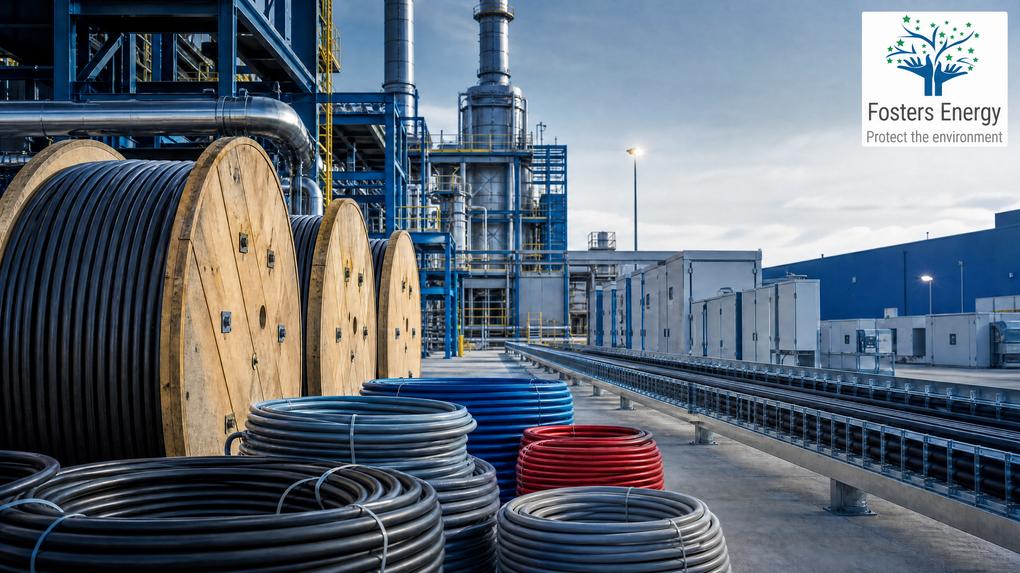
When a Cable Shortage Becomes a Production Problem
A delayed cable drum can hold up commissioning, leave maintenance teams waiting, and force procurement into expensive emergency freight. A wrong specification can be just as costly, creating excess heat, voltage drop, rework, or early failure. For an energy plant, the issue is not simply buying cable; it is protecting operating time and controlling project risk. A fast, coordinated bulk material supply plan makes cable availability an operational decision.
All Type of Electrical Cables for Better Project Flow
Fosters Energy helps energy-sector teams approach All Type of Electrical Cables as part of a controlled procurement plan. Depending on the approved project specification, this may include power, control, instrumentation, flexible, armoured, and other cable requirements. Correct selection connects conductor size, insulation, voltage, environment, and installation method to the actual duty. That reduces mismatched purchases, rework, and unnecessary stock. Where cable decisions sit within a wider plant upgrade, teams can also review engineering solutions for all type of electrical cables.
Where Energy Operators Use It
- Power generation and distribution systems where dependable supply protects production continuity.
- Substations, switchgear, and motor circuits that need stable performance under demanding loads.
- Control, instrumentation, and utility systems where signal integrity supports safe, predictable operation.
- Expansion, maintenance, and shutdown projects that depend on coordinated quantities and delivery windows.
Why It Matters to Operational Optimization
Consolidating cable requirements before site work starts helps procurement align the approved cable schedule, quantities, documentation, and delivery plan. It reduces split orders and the risk of an installation crew waiting for one missing drum. The business impact is practical: fewer material-related stoppages, less emergency freight, better schedule control, and more predictable lifecycle cost.
A practical ROI check
Use a conditional calculation during project planning. On a 1 MW auxiliary load, a 2% reduction in avoidable electrical losses equals 20 kW of continuous demand, or 160 MWh over 8,000 operating hours. If coordinated delivery avoids an 8-hour restart delay, that avoided production cost can be added to the material saving. Actual results depend on cable design, load profile, tariff, and schedule; the value comes from selecting the right cable for the duty rather than making a blanket performance promise.
Benefits for Energy Businesses
- Operational continuity: Coordinated bulk supply reduces material-related stoppages and emergency purchasing.
- Efficiency control: Correct sizing and insulation selection help limit avoidable losses and voltage drop.
- Durability: Application-appropriate construction supports longer service life in demanding plant environments.
- Cost discipline: Fewer split shipments, rework events, and unplanned freight protect the project budget.
- Reliability and safety: Clear specifications and documented selection reduce installation errors and electrical exposure.
Move from Cable Buying to Operational Control
Choosing All Type of Electrical Cables through an engineering-led supplier gives plant managers and procurement heads one practical advantage: decisions are made around operating duty, not only unit price. To discuss your approved cable schedule, delivery plan, or energy application, Talk to our engineers. You can also Download company profile & technical documents before planning the next purchase.