Improve Energy-System Performance with Electric Heaters
When process fluids reach equipment at the wrong temperature, the result is rarely a minor inconvenience. Energy plants can experience unstable operating conditions, slower heat transfer, higher electrical demand, product-quality variation, and avoidable shutdown risk. Leaving the problem unresolved can turn a small temperature-control issue into lost production and rising maintenance cost.
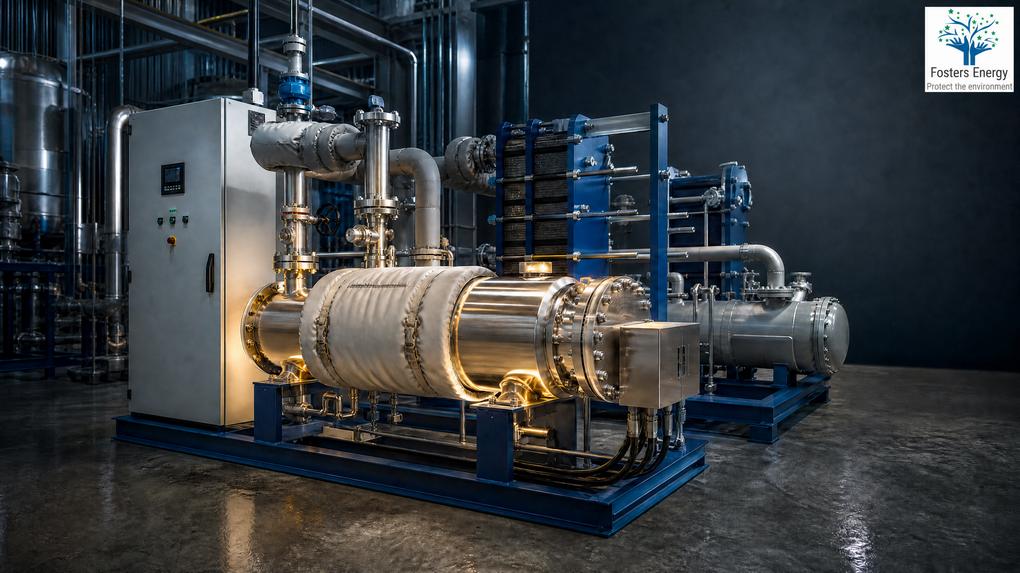
Electric Heaters provide a controlled way to preheat or maintain the temperature of process fluids, water, air, and other media used around heat-exchange systems. Positioned appropriately within a plant’s thermal process, they help plate and shell-and-tube heat exchangers operate closer to their intended duty instead of compensating for cold starts, fluctuating loads, or inconsistent inlet conditions.
Where Electric Heaters Add Value
In energy facilities, electric heaters can support boiler-feed and auxiliary-water systems, fuel and oil conditioning, process-fluid preheating, tank temperature maintenance, and air or gas heating. They are also useful where a stable temperature is needed before a plate or shell-and-tube heat exchanger, or where a controlled finishing temperature is required after heat transfer.
Performance Enhancement That Reaches the Bottom Line
The business case is not simply about adding heat. It is about giving the wider thermal system a more stable operating window. Better temperature control can reduce repeated adjustment, protect process consistency, and help equipment deliver dependable performance across changing demand.
- Improved efficiency: Stable inlet conditions can help heat exchangers transfer energy more consistently, supporting a practical 5–15% improvement in targeted thermal performance where temperature instability is the limiting factor.
- Lower operating cost: Accurate heat input reduces overcorrection and wasted energy, with a site-specific target of 3–10% lower thermal operating cost after proper sizing and control.
- Reduced downtime exposure: More predictable warm-up and process control can shorten temperature-related interruptions, with potential downtime reductions of 10–20% in suitable applications.
- Greater equipment reliability: Controlled heating helps reduce thermal shock and operating swings, lowering stress on connected heat-transfer equipment and extending useful service life.
- Safer, more repeatable operation: A correctly selected heater and control arrangement supports consistent procedures and reduces the need for manual intervention during changing plant conditions.
Choose the Right Thermal Solution
Performance gains depend on the medium, flow rate, target temperature, available power, control strategy, installation limits, and the duty of the connected heat exchanger. Fosters Energy approaches Electric Heaters as part of the plant’s complete thermal requirement, helping decision-makers connect product selection with efficiency, reliability, and lifecycle cost. Explore our industrial electric heaters services and engineering support options.
If your plant is losing performance because process temperatures are difficult to control, Talk to our engineers about a practical improvement path. You can also Download company profile & technical documents to support your internal review.