Shell-and-Tube Heat Exchangers for Operational Optimization
When an energy plant’s process temperature begins to drift, the problem may not be a failed boiler or turbine. A heat exchanger that is undersized, fouled, poorly matched, or operating beyond its design duty can quietly reduce thermal performance, increase fuel and pumping demand, and raise the risk of an unplanned shutdown. Leaving that loss unchecked turns a manageable efficiency issue into higher operating cost and production risk.
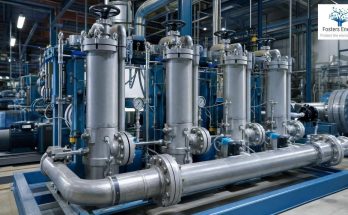
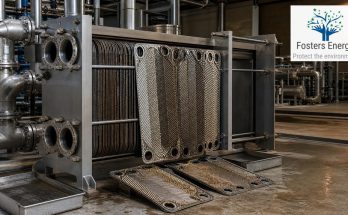
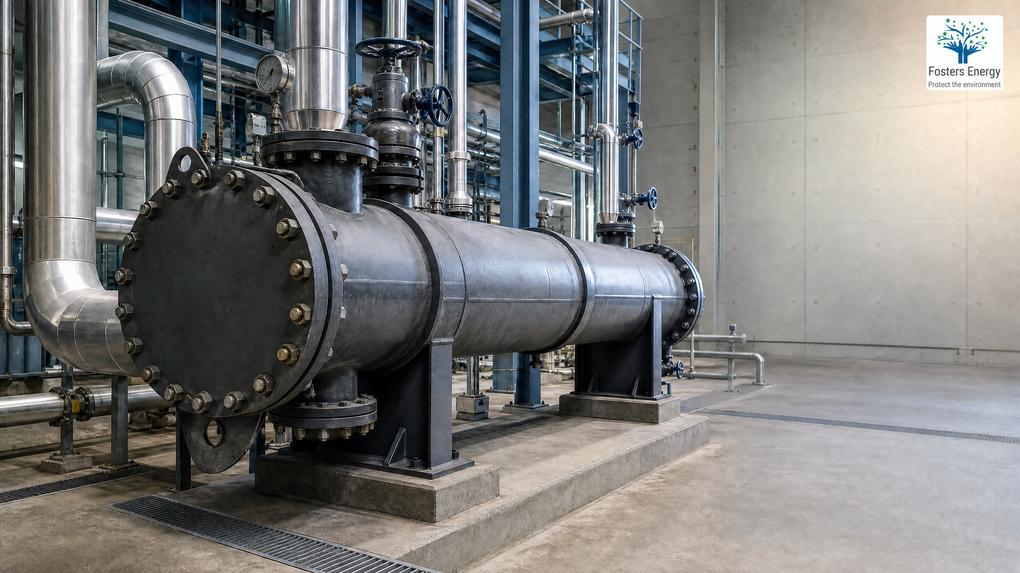
Fosters Energy supplies shell-and-tube heat exchangers to help energy operators maintain dependable heat transfer between process fluids. The unit keeps hot and cold streams separated while transferring heat through a robust tube bundle. In practical terms, the correct selection helps the plant achieve its required duty without forcing connected equipment to work harder than necessary.
Where Shell-and-Tube Heat Exchangers Are Used
These exchangers suit energy applications where fluids may be hot, pressurised, contaminated, or difficult to handle. Typical duties include cooling lubricating oil, heating feedwater, condensing steam, recovering heat from process streams, and controlling temperatures in power-generation and utility systems. The configuration can be selected around the plant’s actual fluid properties, pressure, temperature, materials, and maintenance conditions.
Why Operational Optimization Matters
Optimization is not simply a matter of buying a new exchanger. It means matching thermal duty, pressure-drop limits, materials, and access requirements so the equipment supports stable production throughout its service life. For example, recovering 3% of a 10 MW thermal duty represents 300 kW of restored heat-transfer capacity. The financial result depends on operating hours, energy prices, and production value, but the calculation gives decision-makers a practical way to test the investment.
Before supply, an energy plant can set measurable targets such as 2–3% duty recovery, lower pressure loss, or 25% less exchanger-related downtime, then compare post-installation readings with the baseline. Actual results depend on site conditions. Fosters Energy helps convert those conditions into a practical equipment specification rather than an off-the-shelf guess.
Key Benefits for Energy Operators
- More efficient heat transfer: supports required process temperatures and can reduce avoidable energy use.
- Reliable operation: helps maintain stable duty across demanding plant cycles and reduces production interruptions.
- Lower lifecycle cost: appropriate sizing and material selection can reduce premature replacement and maintenance burden.
- Better operational control: suitable pressure-drop and temperature margins help pumps, boilers, and cooling systems operate more effectively.
- Practical maintainability: a fit-for-purpose design supports inspection and planned intervention, helping protect valuable maintenance windows.
For support with industrial shell-and-tube heat exchanger solutions for energy plants, talk to our engineers about your duty, constraints, and performance targets. You can also download company profile & technical documents before planning the next upgrade.