When an energy project loses value to high power consumption, unused renewable generation and avoidable production interruptions, the hydrogen business case weakens quickly. A hydrogen plant must do more than make gas: it must convert available energy into dependable output at a controlled cost per kilogram. That is why Fosters Energy approaches Hydrogen Plants Manufacturing as an efficiency-led investment, not a standalone equipment purchase.
Turn Energy Inputs into a Lower Cost per Kilogram
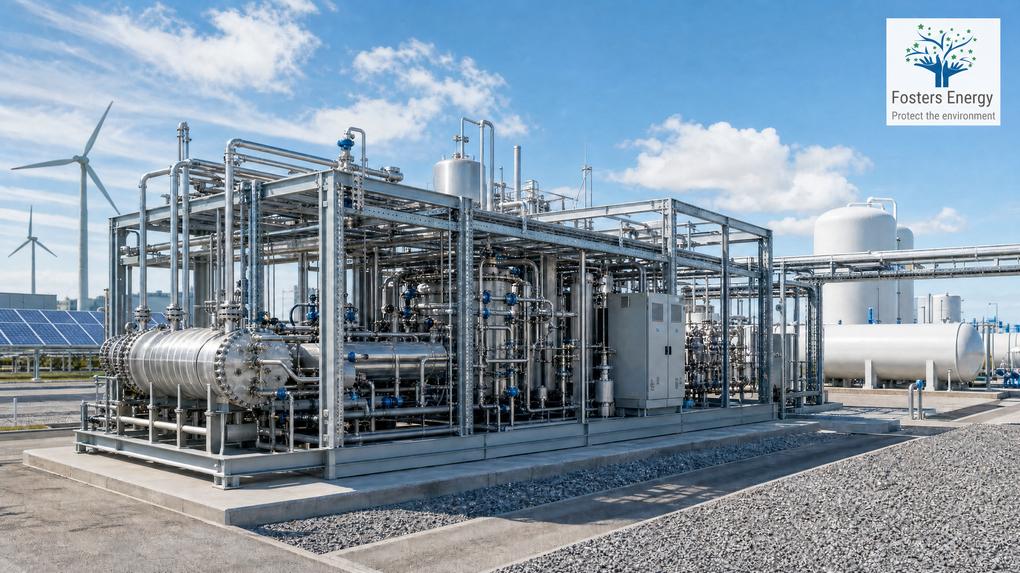
Hydrogen Plants Manufacturing brings the production system, energy integration and operating requirements into one engineered solution. In an electrolysis-based plant, electricity is the principal operating input, so design decisions that reduce avoidable energy loss, support stable loading and match production to the available power profile directly affect operating cost.
A credible ROI model should be built around site data: electricity tariff or renewable profile, required output, operating hours, water treatment, compression and storage requirements, maintenance strategy and expected availability. This makes the investment case measurable rather than theoretical.
How Efficiency Improvements Create Measurable Savings
Even a small improvement has a repeatable financial effect. For example, a 1 kWh/kg reduction in electricity consumption saves US$0.05 per kilogram when power costs US$0.05/kWh. At 10,000 tonnes of annual hydrogen output, that illustrative improvement equates to US$500,000 per year before considering downtime and maintenance savings. Each one-percentage-point gain in availability also represents about 87.6 additional operating hours annually, helping protect planned production capacity.
Where Hydrogen Plant Efficiency Matters Most
Engineered hydrogen plants are relevant where energy use and supply reliability carry a high commercial consequence: refinery hydrogen networks, ammonia and chemical production, industrial energy hubs, renewable-energy projects and power-to-X developments. In these applications, the objective is to reduce the delivered cost of hydrogen while maintaining output that downstream operations can rely on.
Business Benefits of an Engineered Hydrogen Plant
- Lower electricity cost per kilogram: Aligning plant design and operation with the site power profile helps reduce avoidable energy spend.
- Better use of renewable generation: Converting excess available power into hydrogen can improve the value captured from renewable assets.
- Higher production availability: A design built around maintainability and operating conditions helps reduce avoidable interruption risk.
- Controlled lifecycle cost: Clear engineering scope supports informed decisions on utilities, balance-of-plant requirements and maintenance.
- Scalable investment planning: Production capacity can be assessed against demand growth, infrastructure and power availability.
Make the Cost Case Before You Build
Choosing the right plant is about understanding where each unit of energy and each hour of availability creates value. Explore industrial hydrogen plants manufacturing services with Fosters Energy to develop a practical, site-specific path to improved efficiency and lower operating cost. Contact Fosters Energy to discuss your requirements, or Download company profile & technical documents to support your internal evaluation.