Plate Heat Exchanger Hydrostatic Testing: Extend Service Life Before Failure
A plate heat exchanger that shows leakage, rising pressure loss, or a gradual drop in heat-transfer performance is already affecting plant economics. In an Energy facility, ignoring these symptoms can turn a manageable maintenance task into an emergency shutdown, product loss, or secondary equipment damage. Fosters Energy helps plant teams identify whether the exchanger can be safely restored and kept in service longer.
Why Testing Matters in Energy Plants
Fouling, gasket ageing, plate corrosion, thermal cycling, and uneven tightening can weaken the pressure boundary. A unit may appear clean externally while a pinhole leak or damaged gasket allows cross-contamination between circuits. Hydrostatic testing applies controlled water pressure after service work to verify tightness before the exchanger returns to operation.
Testing is most valuable when it is part of a complete maintenance assessment, not an isolated box-ticking exercise. Fosters Energy’s industrial plate heat exchanger hydrostatic testing services connect pressure integrity with the condition of plates, gaskets, and the wider operating problem.
How the Maintenance Process Protects the Asset
1. Open, clean, and inspect
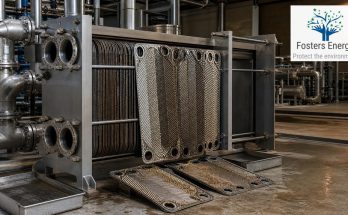
The exchanger is dismantled under a controlled procedure. High-pressure cleaning removes deposits that restrict flow, while chemical cleaning is selected where deposits require a more targeted treatment. Plates are then checked for distortion, corrosion, and defects, including dye penetrant testing where appropriate. This reveals issues that visual inspection alone may miss.
2. Restore the pressure boundary
Damaged or unsuitable plates are replaced, and worn gaskets are renewed through accurate re-gasketing. Correct plate arrangement, gasket seating, and tightening are essential to prevent repeat leakage and protect thermal performance. The unit is reassembled with attention to the original operating requirements.
3. Prove integrity before restart
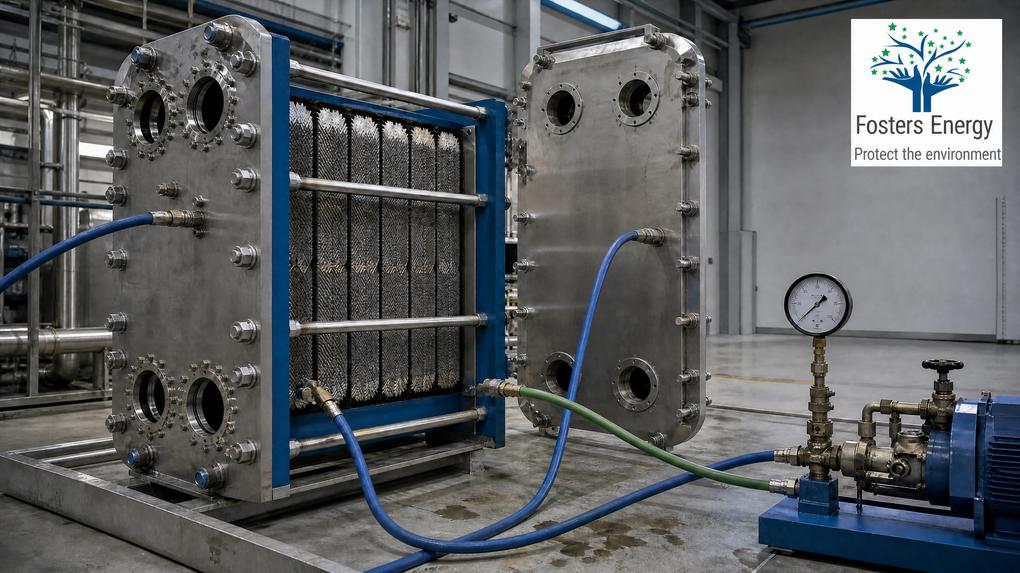
Hydrostatic testing is performed with water at a controlled pressure and held for the agreed inspection period. The team checks for visible leakage, pressure loss, and abnormal behaviour before releasing the exchanger for operation. This final verification reduces restart risk and provides documented evidence for maintenance records.
Business Value: More Life, Less Disruption
- Efficiency recovery: Restoring a fouled or leaking exchanger can help recover lost thermal performance; even a 3–5% improvement should be visible in before-and-after operating data.
- Downtime reduction: Finding a pressure-boundary defect during planned maintenance can avoid an emergency outage. For example, reducing a 24-hour shutdown to a planned 4-hour intervention recovers 20 production hours.
- Lower lifecycle cost: Extending a serviceable exchanger’s life delays premature replacement and reduces repeat callouts, water, energy, and production losses associated with unplanned work.
Why Choose Fosters Energy?
Fosters Energy approaches hydrostatic testing as an engineering partner, not simply a contractor. The focus is to connect field inspection, corrective maintenance, pressure integrity, and operating results so decision-makers can choose repair, replacement, or continued service with greater confidence.
To discuss an exchanger showing leakage, efficiency drop, or pressure loss, talk to Fosters Energy engineers. You can also download company profile and technical documents before planning your next maintenance window.