Plate Heat Exchanger Maintenance: A Strategy for More Reliable Energy Plants
A plate heat exchanger rarely fails without warning. Rising pressure loss, reduced outlet temperature, visible leakage, or longer start-up times usually indicate fouling, gasket deterioration, plate damage, or an unbalanced flow path. If these symptoms are ignored, the plant pays through higher pumping and heating costs, unstable process conditions, and an avoidable emergency shutdown.
For energy facilities, Plate Heat Exchanger Maintenance should therefore be managed as a maintenance strategy—not a last-minute repair. Planned intervention protects thermal efficiency, improves operational reliability, and gives plant managers a clearer basis for controlling lifecycle cost. Fosters Energy supports this approach with practical engineering expertise for industrial heat-transfer equipment.
What the Maintenance Strategy Covers
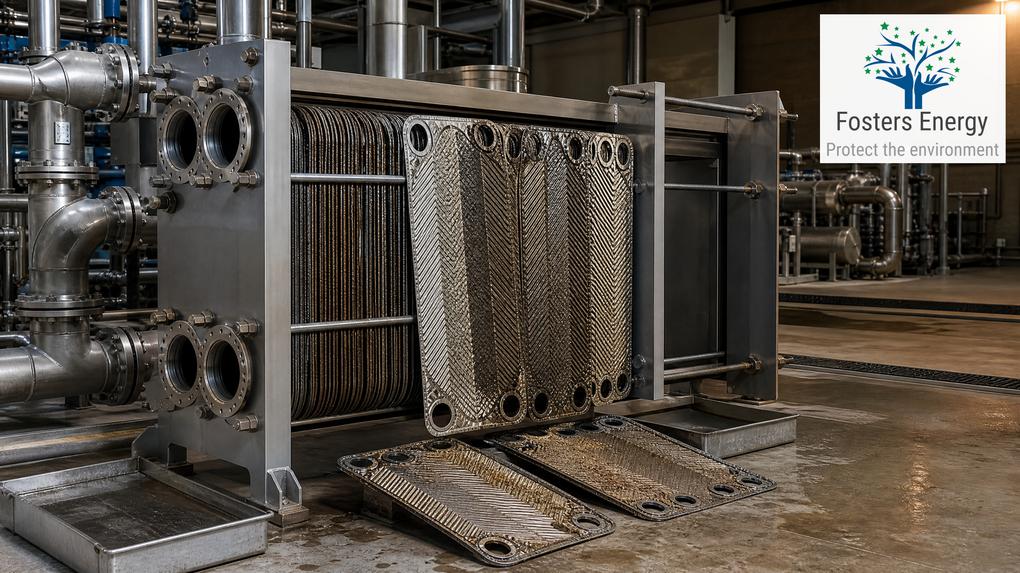
The work begins with a review of operating symptoms, temperature approach, pressure readings, leakage history, and the planned maintenance window. The exchanger is then isolated and carefully dismantled so each plate, gasket, frame, and connection can be assessed without creating new damage.
Inspection, Cleaning, and Corrective Work
- High-pressure cleaning removes deposits that restrict flow and reduce heat transfer.
- Chemical cleaning is selected where scale or stubborn process contamination cannot be removed mechanically.
- Dye penetrant testing helps identify cracks or surface defects that could lead to cross-contamination or leakage.
- Plate replacement addresses damaged or excessively worn heat-transfer surfaces before they trigger an unplanned outage.
- Re-gasketing restores sealing integrity and reduces the risk of external or internal leakage.
- Reassembly and hydrostatic testing verify correct plate alignment, tightening, and pressure integrity before the exchanger returns to service.
These steps turn maintenance findings into an operational decision. Depending on exchanger condition and deposit severity, a realistic business case may target recovery of approximately 5–15% of lost thermal performance and a 20–40% reduction in maintenance-related outage exposure. Actual results depend on the equipment, process, and scope confirmed during inspection.
Why Planned Maintenance Pays Back
- Lower energy and pumping costs from restored heat-transfer performance.
- Reduced downtime because corrective work is completed inside a controlled maintenance window.
- Extended exchanger life through timely plate and gasket replacement.
- Lower safety and reliability risk by addressing leakage and pressure loss before escalation.
Fosters Energy acts as an engineering partner, not simply a contractor. Our team helps connect inspection results to plant priorities, maintenance planning, and total operating cost. Review our industrial plate heat exchanger maintenance services, then talk to our engineers about a practical maintenance strategy. You can also download company profile and technical documents for internal review.