
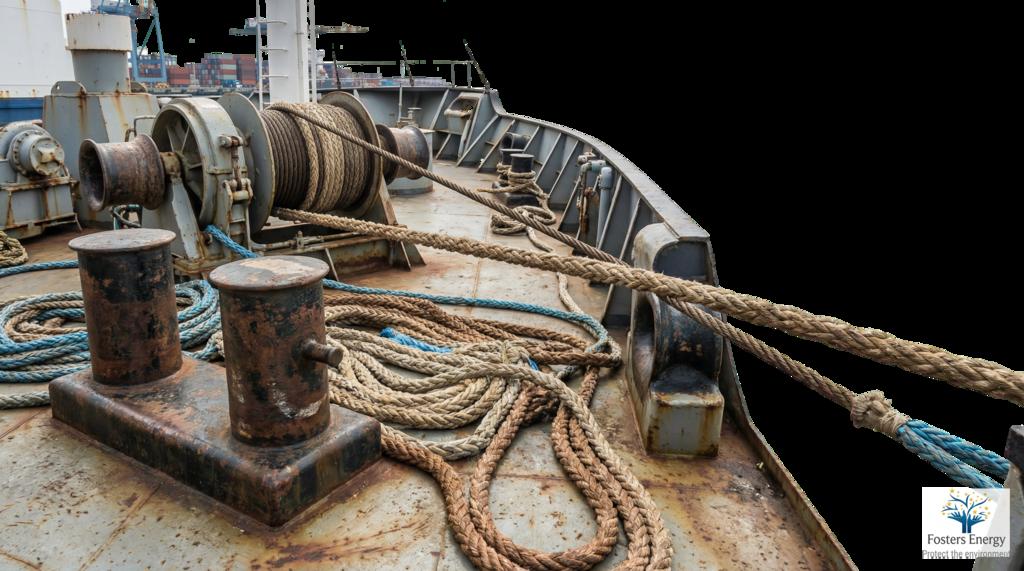
Marine Ropes for Performance Enhancement in Marine Operations
Introduction
In marine operations, performance losses are not always caused by engines, pumps, or heat transfer equipment. Many delays, safety incidents, and handling inefficiencies originate at the deck level, where ropes are expected to absorb dynamic loads, remain manageable in confined work areas, and perform consistently under saltwater exposure, repeated tension cycles, and abrasive contact surfaces. When rope performance is poor, operators face longer mooring times, higher risk during line handling, inconsistent vessel positioning, and a faster rate of replacement. For ship operators, terminal teams, and marine maintenance personnel, rope selection becomes a practical engineering decision rather than a routine consumable purchase.
Well-selected Marine Ropes contribute directly to performance enhancement because they influence how efficiently a vessel can berth, secure, transfer load, and maintain safe deck operations. Rope behavior under load affects winch control, crew handling effort, elongation response, and the overall stability of mooring arrangements. In demanding port and offshore environments, the wrong rope specification can increase line wear, reduce operational confidence, and create avoidable interruptions during vessel movement. This is why technically guided supply matters. Fosters Energy positions marine equipment within an engineering context, helping operators align rope selection with real operating conditions instead of relying on generic assumptions.
For marine organizations focused on performance enhancement, the objective is not simply to buy ropes with a higher nominal capacity. The objective is to improve operational reliability, maintain predictable handling characteristics, reduce deck-related risk, and achieve a more stable service life in actual use. That requires understanding the technical challenges ropes face and the engineering principles behind choosing the correct product for the duty.
Technical Challenge
Dynamic Loading and Shock Absorption
Marine ropes rarely operate under static conditions. During berthing, unberthing, towing assistance, or offshore support activity, lines are exposed to fluctuating loads caused by vessel movement, wave action, wind forces, and winch response. These conditions generate peak loads that may be substantially different from nominal working loads. If the rope construction and elongation behavior are not compatible with the application, the result can be unstable line control, excessive stretch, or an abrupt transfer of force to deck fittings and crew handling zones.
Abrasion, Chafe, and Surface Damage
One of the most common causes of rope degradation is continuous rubbing against fairleads, bitts, chocks, drums, and quay-side contact points. Surface abrasion may appear gradual, but it reduces rope integrity over time and can accelerate internal damage. In high-frequency mooring environments, even small mismatches between rope construction and deck hardware can shorten service life and create inconsistent performance during critical operations.
Environmental Exposure
Saltwater, ultraviolet radiation, temperature changes, and contamination from oil, grit, and deck residues all influence rope condition. Moisture retention, surface hardening, and contamination can alter flexibility and make handling more difficult for deck crews. Marine ropes must therefore be chosen with attention to environmental durability, not only tensile capacity. A rope that handles well on paper may perform poorly if its behavior changes significantly after prolonged exposure to marine conditions.
Handling Efficiency and Crew Safety
Performance enhancement in marine operations is closely connected to human factors. If ropes are too heavy, too stiff, or too unpredictable during tensioning, deck operations become slower and more hazardous. Poor coil memory, uneven diameter, and degraded outer surfaces can complicate spooling and deployment. In severe cases, unsafe handling conditions increase the risk of line recoil zones, trapped hands, and delayed release or retrieval.
Engineering Solution
Application-Based Rope Selection
The correct engineering approach begins with the duty profile. Marine ropes for harbor mooring, offshore support, towing assistance, and general deck service are not selected in the same way. The rope must be matched to expected load ranges, frequency of use, deck equipment geometry, environmental exposure, and operator handling requirements. This ensures that the chosen product supports operational performance rather than becoming a weak point in the system.
Compatibility with Deck Equipment
Rope performance is strongly influenced by how it interacts with winches, drums, fairleads, rollers, and termination arrangements. Diameter consistency, flexibility, splice quality, and construction stability all affect how the rope runs over hardware and how evenly load is distributed. Performance enhancement is achieved when the rope and the deck system operate as a coordinated package, reducing slip, uneven wear, and handling resistance.
Inspection-Oriented Operation
Even high-quality marine ropes require disciplined inspection to maintain performance. Visual checks for abrasion, strand distortion, glazing, cuts, flattening, contamination, and localized stiffness help operators identify when a rope is moving out of safe working condition. Engineering value is added when supply decisions account for inspection access, handling practicality, and replacement planning rather than focusing only on initial procurement cost.
Lifecycle-Focused Procurement
Marine performance improves when rope procurement is based on service life, operational stability, and handling efficiency across the full duty cycle. A lower-cost rope that needs frequent replacement, causes slow deck work, or wears rapidly against hardware can raise total operating cost. A more suitable rope specification can reduce interruptions, stabilize maintenance planning, and improve consistency in daily vessel operations.
Product Explanation
Marine Ropes are essential deck products used for mooring, securing, towing support, and general vessel handling functions. In industrial marine service, they are not judged only by nominal breaking strength. Their practical value depends on a combination of construction quality, load response, flexibility, abrasion resistance, handling behavior, and compatibility with the vessel’s operating environment. For operators seeking performance enhancement, the right marine rope is one that performs predictably under repeated marine duty while remaining manageable for crews and suitable for onboard equipment.
From an engineering perspective, rope performance can be assessed through several practical factors. These include how the rope behaves under cyclic loading, how it retains its form after repeated spooling, how resistant it is to external wear, and how effectively it supports controlled line handling during berthing and securing activities. Elongation behavior is particularly important. Excessive stretch can reduce positional control, while insufficient energy absorption can transfer higher shock loads into the mooring arrangement. The ideal balance depends on the vessel’s specific application.
Another important factor is structural stability. Marine ropes must maintain usable geometry during service so they run correctly across deck fittings and maintain confidence during deployment and retrieval. Rope construction also influences how easy it is to inspect the outer surface and identify damage trends before failure develops. In practical operation, this means the rope should support both performance and maintainability.
When supplied through an engineering-oriented source, marine ropes can be selected with attention to actual operating conditions such as berth configuration, line handling frequency, deck layout, environmental severity, and the operator’s maintenance practices. This approach improves performance because the rope is treated as part of the operating system, not as an isolated commodity. It is one of the reasons marine operators working with Fosters Energy can align procurement decisions more closely with operational reality.
Benefits
- Improved mooring efficiency: Properly selected marine ropes support smoother deployment, tensioning, and recovery, reducing delays during berthing and departure.
- Better handling characteristics: Balanced flexibility and stable construction help crews manage lines more safely and with less physical resistance.
- Reduced wear-related interruptions: Ropes matched to deck hardware and environmental conditions experience more predictable service life and fewer premature replacements.
- More stable load performance: Appropriate elongation and structural behavior improve control during dynamic vessel movement and changing weather conditions.
- Enhanced deck safety: Consistent rope condition and predictable line response contribute to safer line handling and clearer operational control.
- Lower lifecycle cost: Performance-based selection can reduce replacement frequency, limit operational disruption, and support better maintenance planning.
These benefits are not theoretical. In marine operations, time lost during line handling, repositioning, or rope replacement directly affects vessel availability and turnaround. A rope that supports repeatable deck performance creates measurable operational value even before broader maintenance costs are considered.
Applications in Marine
Mooring Operations
Mooring remains the primary application for marine ropes across cargo vessels, support vessels, workboats, and terminal-linked marine assets. In this duty, the rope must help maintain vessel position while responding to changing loads generated by tide, swell, passing traffic, and loading activity. Reliable mooring rope performance improves berth stability, reduces handling time, and supports safe communication between ship and shore teams.
Offshore and Support Duties
Marine ropes are also used in offshore-linked operations where repeated deployment, retrieval, and environmental exposure place higher demands on durability and handling. In these cases, operators need ropes that remain manageable under wet and abrasive conditions while preserving structural integrity through repeated cycles.
Towing and Deck Assistance
During towing support or vessel assistance, ropes may experience variable loading patterns that require dependable line behavior and stable construction. Product performance in these applications affects response time, control, and crew confidence during coordination between vessels.
General Vessel Securing and Handling
Across shipboard operations, ropes are used in controlled securing tasks where durability, flexibility, and ease of inspection are important. Even where loads are lower than primary mooring service, rope quality still influences operational smoothness and replacement planning.
Why Fosters Energy
Fosters Energy is positioned as an engineering solutions provider serving marine and industrial operations, not simply as a trading source for generic equipment. That distinction matters when selecting marine ropes for performance enhancement. Rope supply becomes more effective when it is supported by practical understanding of deck conditions, handling requirements, and the relationship between product behavior and operating efficiency.
Within its marine portfolio, Fosters Energy supports customers with technically aligned supply for marine products used in real operating environments. This makes the discussion more useful for fleet operators, marine engineers, ship managers, and procurement teams who need products that fit the duty rather than catalog descriptions that ignore operational detail. An engineering-oriented supplier can help align rope selection with load profile, environment, hardware interaction, and maintenance expectations.
This approach is especially relevant where rope performance affects vessel turnaround, berth safety, and deck workflow. By treating marine ropes as part of the broader performance equation, Fosters Energy helps customers move from simple replacement purchasing toward a more reliable and operationally sound selection process.
Conclusion
Marine ropes play a direct role in marine performance enhancement because they influence how safely and efficiently vessels can be secured, handled, and supported in daily operation. Their impact extends beyond line strength to include handling quality, abrasion resistance, load control, deck safety, and lifecycle stability. In demanding marine service, these factors determine whether the rope supports performance or becomes a recurring operational problem.
For vessel operators and marine procurement teams, the practical path forward is to evaluate marine ropes according to operating duty, environmental exposure, deck hardware compatibility, and inspection requirements. When selected through an engineering lens, the product contributes to smoother deck operations, more predictable service life, and better control under real marine conditions. That is the basis of meaningful performance enhancement, and it is where technically informed supply adds the greatest value.